I am a PhD candidate in Psychology at Stanford University, advised by Professor Judy Fan. My research is supported by a NSF Graduate Research Fellowship. I’m excited about computational modeling of cognition and “creative” domains like music.
If you’re a researcher at Stanford, check out our Computational Cognitive Science Reading Group!
I did my undergrad at University of Michigan, studying french horn (music performance) and cognitive science. There I worked with Professor Taraz Lee in the Cognition, Control, and Action Lab and wrote my honors thesis on music and language. In the following years, I’ve greatly enjoyed being a part of the Cognitive and Data Science Lab at Rutgers Newark and the Language & Cognitive Architecture Lab at Michigan.
What reusable shortcuts do people propose when solving assembly problems? Anderson, S. P., Yang, J., Bowers, M. L., Wong, L., & Fan, J. E. (2026) Proceedings of Cognitive Science Society paper poster Stop by our poster P4-I-86, Poster session 4 (Saturday, 15:15 – 16:30 GMT -3) at CogSci '26! |
|
Consequences of prior experience on visual problem solving Anderson, S. P., Wong, L., Bowers, M. L., & Fan, J. E. (2025) poster People rarely encounter the same exact problem twice, but many problems are similar. What strategies do people discover when solving similar problems, and what is the impact of that experience on how they approach new ones? In a series of tangram puzzles, participants learned to use an efficient "shortcut" piece to solve the puzzles in fewer moves. When facing new puzzles where that shortcut piece was no longer useful, participants maintained their solving speed, reflecting their ability to flexibly adapt their strategies to new problems. |
|
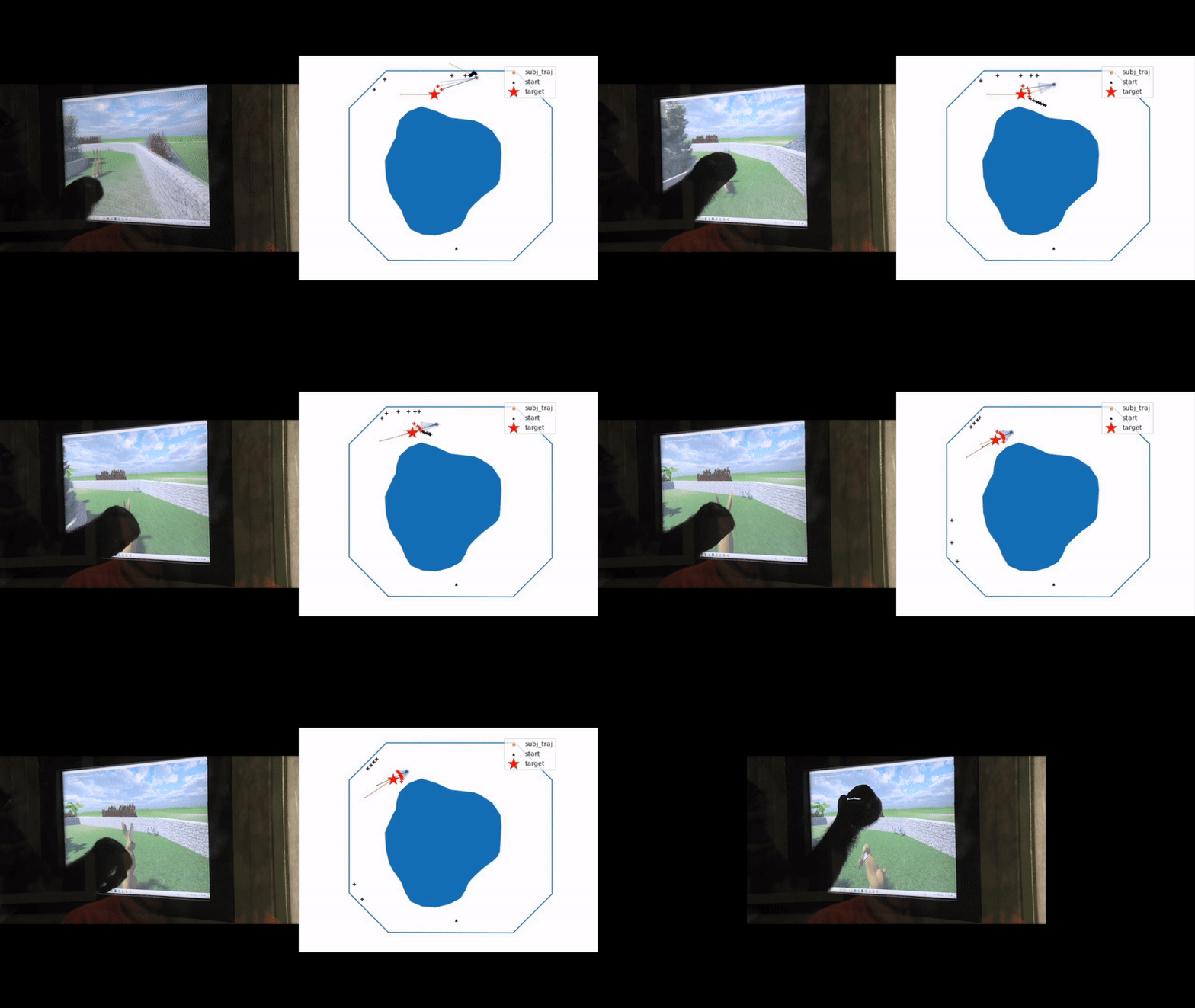 |
Chimpanzees (Pan troglodytes) and bonobos (Pan paniscus) chase prey around obstacles in virtual environments Rapport Munro, E., Koopman, S. E., Anderson, S. P., Schweller, K., Röhr, H., Kleiman-Weiner, M., Lewis, R., Klein, B., Allritz, M., Robinson, L. M., Dolins, F. L., & Call, J. (2025) Journal of Comparative Psychology doi Can we study how primates navigate and hunt with realistic video games? We trained bonobos and chimpanzees to play a video game where they collect fruit and hunt bunnies using a touchscreen. In a few cases, they appear to anticipate where bunnies move ahead of time, moving in a direction away from a virtual bunny's current position and towards the bunny's future position. |
How does assembling an object affect memory for it? McCarthy, W. P., Anderson, S.P., Fan, J. E. (2024) Proceedings of Cognitive Science Society paper People learn about physical objects both by looking and interacting with them. What do people learn differently when they reconstruct an object as opposed to just look at it? We found that, when participants copied a block tower part-by-part, compared to having passively viewed it, they had worse memory for it when tested later. However, if participants first reconstructed the tower from working memory, rather than recognized it from a lineup of other towers, they had better memory for it when tested later. Interacting with physical objects by actively editing or reconstructing them might not lead to better memory for them in all cases. |
|
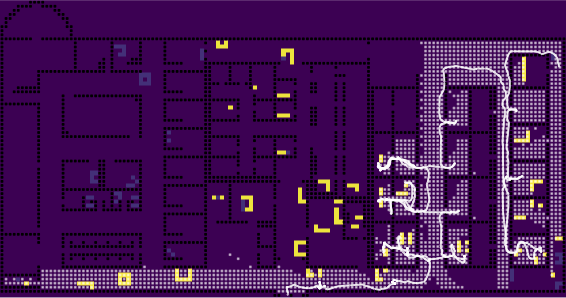 |
Inferring knowledge from behavior in search-and-rescue tasks Yang, S. C.-H., Anderson, S., Wang, P., Rank, C., Folke, T., Shafto, P. (2021) poster To give a teammate the information they need, it's helpful to infer what they already know. In a Minecraft task, participants searched a partially demolished building for survivors. From only the participants' movements, our model inferred which floorplan participants had studied before they entered the building (DARPA ASIST). |
|
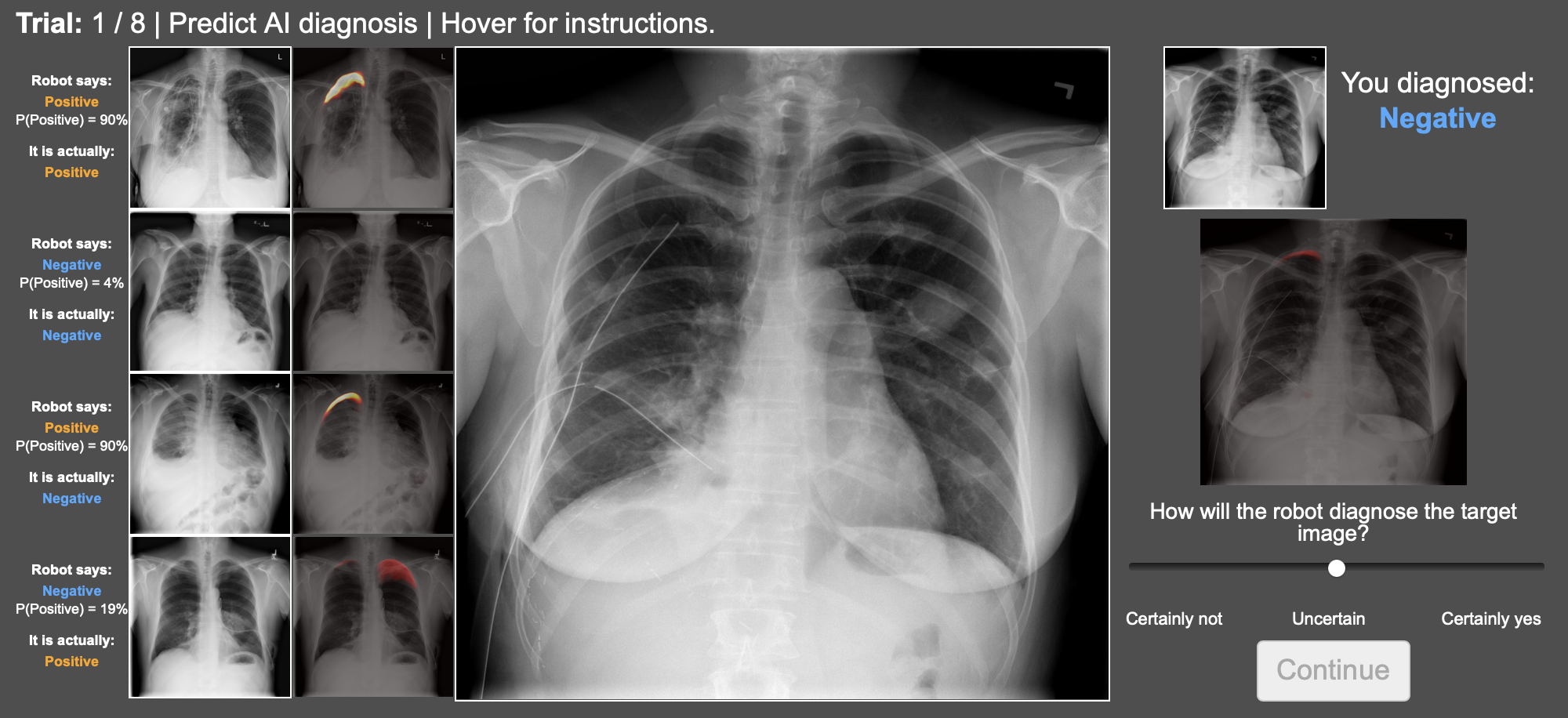
Explainable AI for medical imaging: explaining pneumothorax diagnoses with Bayesian teaching Folke, T., Yang, S. C.-H., Anderson, S., & Shafto, P. (2021) doi AI systems can aid doctors in detecting disease, but only if we trust systems appropriately. What kinds of explanations of AI behavior are most effective? Using a model of how people communicate, we selected examples of an AI classfier's diagnoses on X-ray images to be informative about its general behavior. When provided these examples, radiologists could accurately predict what the AI classifier diagnosed on other images. |
|
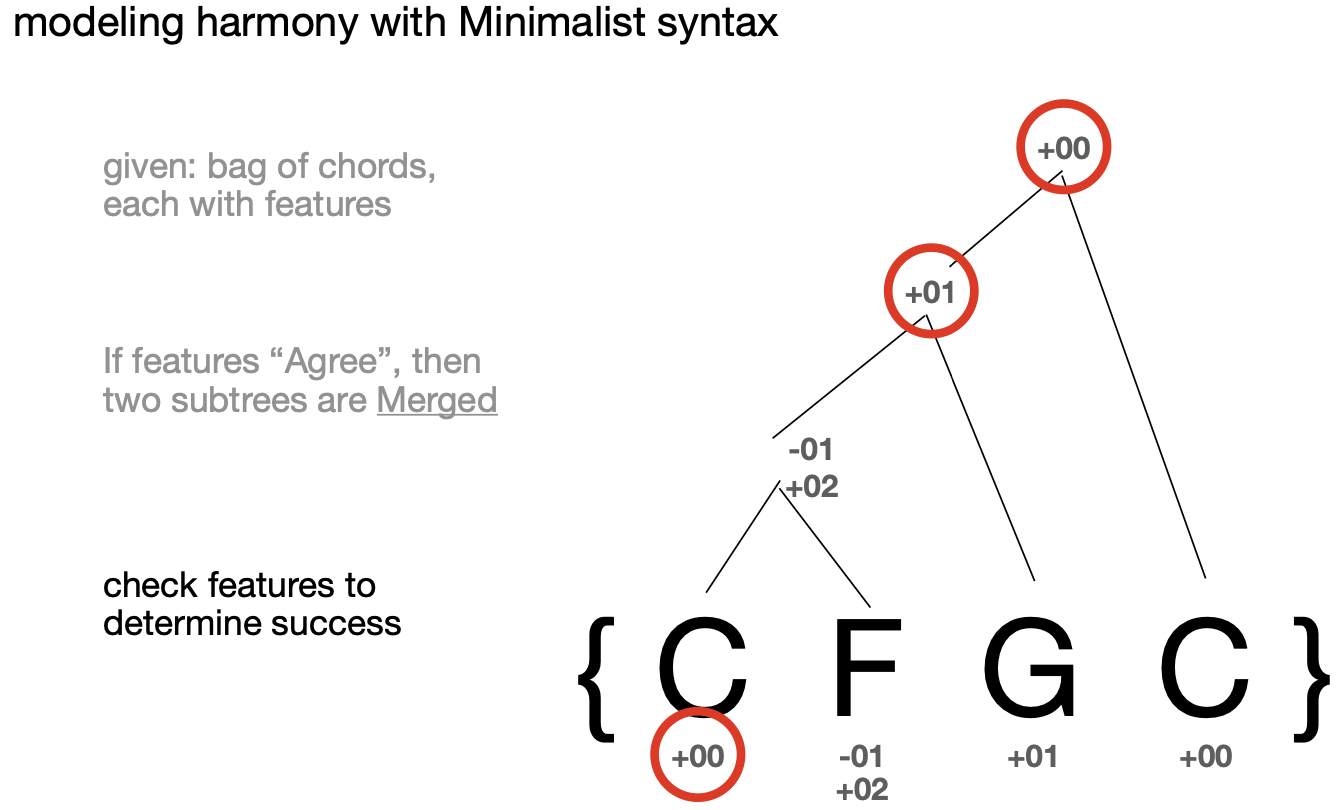
A linguistic model of minimalist syntax composes Tebe poem Anderson, S. P. (2020) doi For my undergrad honors thesis, I reformulated a simplified model of Minimalist syntax to write Western Tonal chord progressions. This resulted in a better parse of Bortniansky's Tebe Poem. It was the first (to our knowledge) programmatic simulation of Minimalist ideas in music composition. |
|
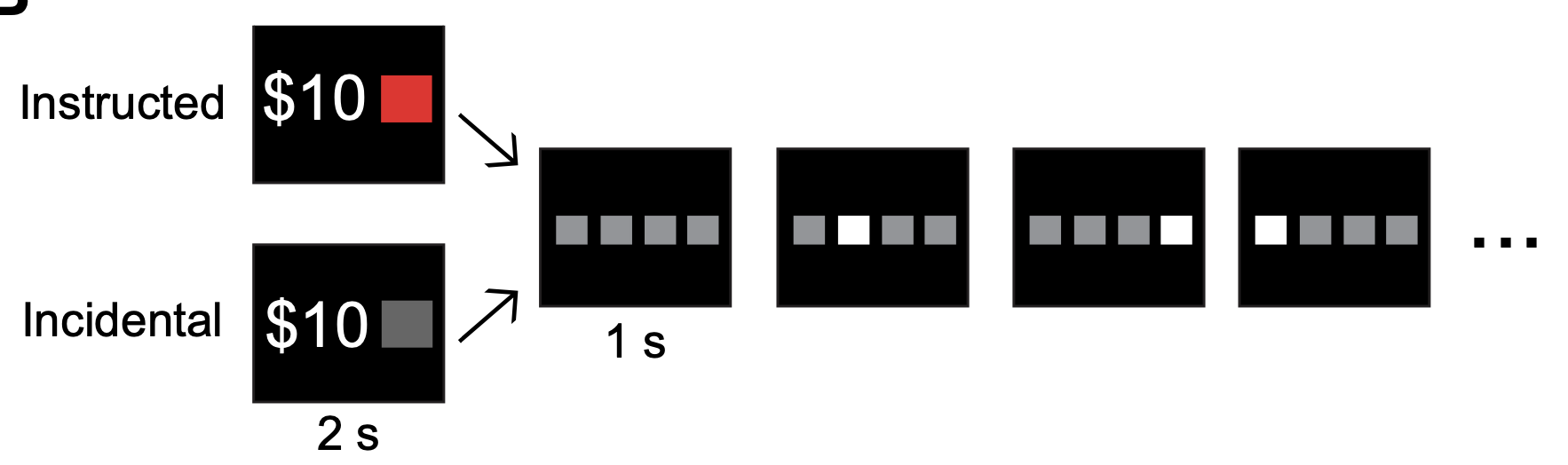
Rewards interact with explicit knowledge to enhance skilled motor performance Anderson, S. P., Adkins, T. J., Gary, B. S., & Lee, T. G. (2020) Journal of Neurophysiology doi When we learn movement skills (such as riding a bike), we develop both explicit “conscious” knowledge of our movements (knowing the sequence of letters in a password) as well as implicit, “unconscious” knowledge (quickly typing the password with muscle memory). When we’re more motivated, we perform these movements faster and more accurately. We find that not only does motivation enhance individual muscle movements, but also our ability to plan movements ahead, when we have explicit knowledge of those movements ahead of time. |